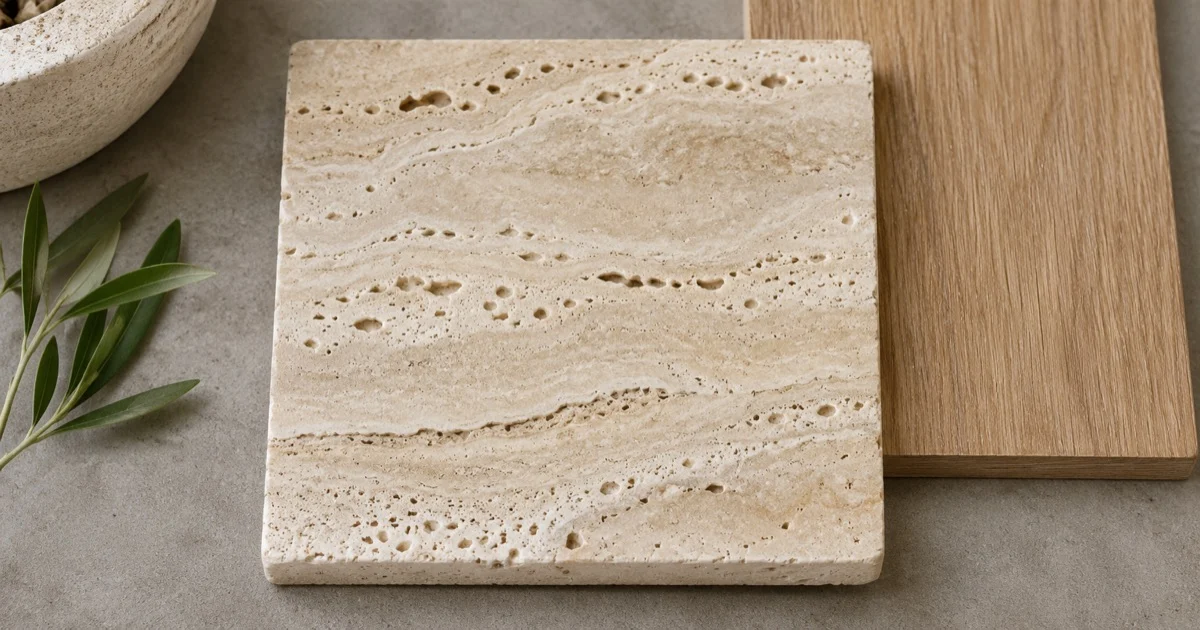
Travertine is a natural carbonate stone deposited from mineral-rich water. It commonly contains pores and cavities that may be left open or filled during processing. Its finish, filling and installation system determine where it can work, so assess the actual product rather than assuming every travertine suits every space.
When asking what is travertine, look closely at its structure as well as its colour. Those details influence cleaning, appearance and the way the stone feels underfoot.
What is travertine, and why does it have pores?
Travertine forms as carbonate minerals precipitate from water. Voids can remain within the stone, creating its characteristic open structure; the University of Minnesota’s carbonate stone reference describes travertine formation.
Manufacturers may fill cavities to produce a more continuous surface. Ask whether the selected product is filled, what filling is used and how it should be maintained.
Which travertine finishes should you compare?
Compare finishes by appearance, touch and the performance evidence for your intended area. Honed describes a smooth, low-sheen finish, while tumbled generally describes a softer, worn-looking surface and edges.
| Option | Visual texture | Planning attention |
|---|---|---|
| Filled surface | More continuous | Filler care |
| Unfilled surface | More open | Cavity cleaning |
| Exterior or wet area | Product dependent | Slip and installation evidence |
Do not specify a polished or textured product for a wet floor from appearance alone. Confirm slip suitability and the complete substrate, drainage and installation requirements with the project team.
Which natural travertine products can you inspect?
Compare Rosso Travertine, Classic Travertine and Classic Travertine Medium in person. Review the actual finish and filling, and ask about variations across the pieces needed for your project.
 Natural travertine
Rosso Travertine
View the actual slab and confirm suitability.
View stone Natural travertine
Classic Travertine
View the actual slab and confirm suitability.
View stone Natural travertine
Classic Travertine Medium
View the actual slab and confirm suitability.
View stoneThese are natural stone slab examples from ESG’s stone range. Confirm their intended use and current availability; a similar-looking porcelain tile is a different material and needs its own specification.
How do you care for travertine stone?
Use a suitable neutral stone cleaner and soft cleaning tools. Keep vinegar, citrus cleaners and abrasive products away, because carbonate stone can etch or become damaged.
Ask whether sealing is appropriate and follow product-specific renewal advice. Natural stone remains outside the prohibited engineered stone category described in Safe Work Australia’s ban guidance.
Leave cutting, grinding, drilling and installation to professionals. Processing stone can release hazardous silica dust, and large pieces also require planned handling and support.
What else should you know about travertine?
Is travertine the same as marble?
Travertine and marble are both commonly carbonate-rich natural stones, but they form differently and have different structures. Travertine is deposited from mineral-rich water and commonly contains cavities. Confirm the selected product’s filling, finish and care requirements rather than treating the two materials as interchangeable.
Can travertine be used outdoors?
Some travertine products can suit exterior applications, but suitability depends on the actual stone, finish, filling and installation system. Assess wet slip performance, drainage, substrate and exposure. A product’s appearance or the word tumbled does not establish that it is appropriate for your particular outdoor area.
Does travertine need sealing?
Sealing advice depends on the selected stone, filling, finish and application. Ask the supplier to recommend a compatible treatment and review interval. Sealer can improve stain resistance but will not make travertine stain-proof or prevent acid etching, so cleaning habits and suitable products still matter.
How do filled and unfilled travertine differ?
Filled travertine has cavities treated with a filling material, while unfilled products retain more open pores. This changes appearance and maintenance considerations. Ask what filling is used and whether it suits the planned location, especially outdoors or in wet areas, before approving the product and installation.