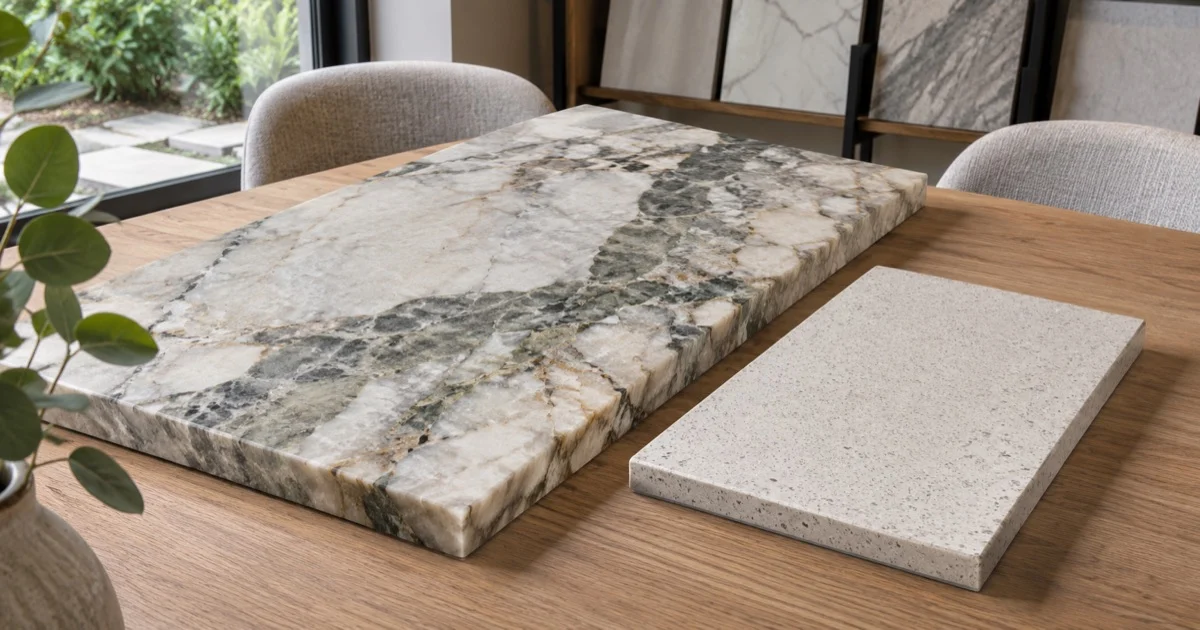
Natural stone vs engineered stone is primarily a comparison of origin and composition. Natural stone is quarried rock; engineered stone is manufactured from combined ingredients. In Australia, prohibited engineered stone benchtops, panels and slabs have been banned since 1 July 2024, so compliance comes before colour or brand preference.
For a new kitchen, compare the exact material being offered. Neither a familiar brand nor a stone-like appearance tells you enough about composition, care or lawful supply.
How does natural stone vs engineered stone differ?
Natural stone is extracted as rock and processed into usable pieces. Manufactured products combine ingredients through an industrial process; their composition must be checked product by product.
| Consideration | Natural stone | Manufactured surface |
|---|---|---|
| Slab variation | Generally higher | Generally more controlled |
| Care consistency | Stone dependent | Product dependent |
| Compliance review | Confirm classification | Confirm composition and legal status |
A commercial material name is a starting point, not proof of performance. Ask for the information relevant to the selected slab or product code.
What does the engineered stone ban cover?
The ban covers manufacture, supply, processing and installation of engineered stone benchtops, panels and slabs within the prohibited definition. Safe Work Australia explains that definition and the exclusions.
Natural stone is outside that definition. Porcelain and sintered stone exclusions require products without resin; check the documentation for the exact product rather than assuming all manufactured surfaces are treated alike.
Which natural stone options should you compare?
Start with marble, quartzite and granite as different natural stone families. Ceppo Rosso, Fantasy Lux and Aqua Green provide three catalogue examples to inspect, with suitability confirmed for the actual slabs.
 Marble collection
Ceppo Rosso
View the actual slab and confirm suitability.
View stone Quartzite collection
Fantasy Lux
View the actual slab and confirm suitability.
View stone Granite collection
Aqua Green
View the actual slab and confirm suitability.
View stoneUse ESG’s stone collection to build a shortlist, then assess finish, treatment and layout with your fabricator. Do not assume that one stone category has identical performance across every product.
How should care and fabrication guide your choice?
Match the surface to the way you cook and clean. Marble can etch from acids, while genuine quartzite and many granites generally resist ordinary food acids better; all need appropriate protection and cleaning.
The Natural Stone Institute’s care guidance explains why composition matters. Ask separately about sealing, direct heat, restoration and cleaning instructions.
Never cut, grind, sand or drill stone yourself. Natural and manufactured materials can pose serious dust risks during processing, so use a professional fabricator with suitable controls and a confirmed installation plan.
What else should you know about stone surface categories?
Are all manufactured benchtop surfaces banned?
No. The ban concerns engineered stone benchtops, panels and slabs within the prohibited definition. Other manufactured materials can fall outside that definition or within specific exclusions. Confirm the exact product’s composition, documentation and intended use rather than deciding compliance from a brand or general surface label.
Is natural stone completely free of silica risk?
No. Natural stone can contain crystalline silica, and processing may release hazardous respirable dust. Its exclusion from the engineered stone ban does not make DIY cutting or drilling safe. Leave fabrication, modifications and slab handling to professionals using appropriate controls for the material and task.
Does natural stone always need more maintenance?
Maintenance depends on the particular material, finish, treatment and use. Some stones resist household acids better than others, while some need more attention to sealing or spills. Compare the actual care instructions instead of assuming every natural stone requires the same routine or every manufactured surface needs less.
How should you compare two shortlisted surfaces?
Compare composition, current compliance, sample appearance, actual slab variation, cleaning instructions and fabrication requirements. Ask how joins, cut-outs, edges and support will be handled in your layout. Review the complete specification and responsibilities before approval, including final measurements, access and the selected product’s written care guidance.