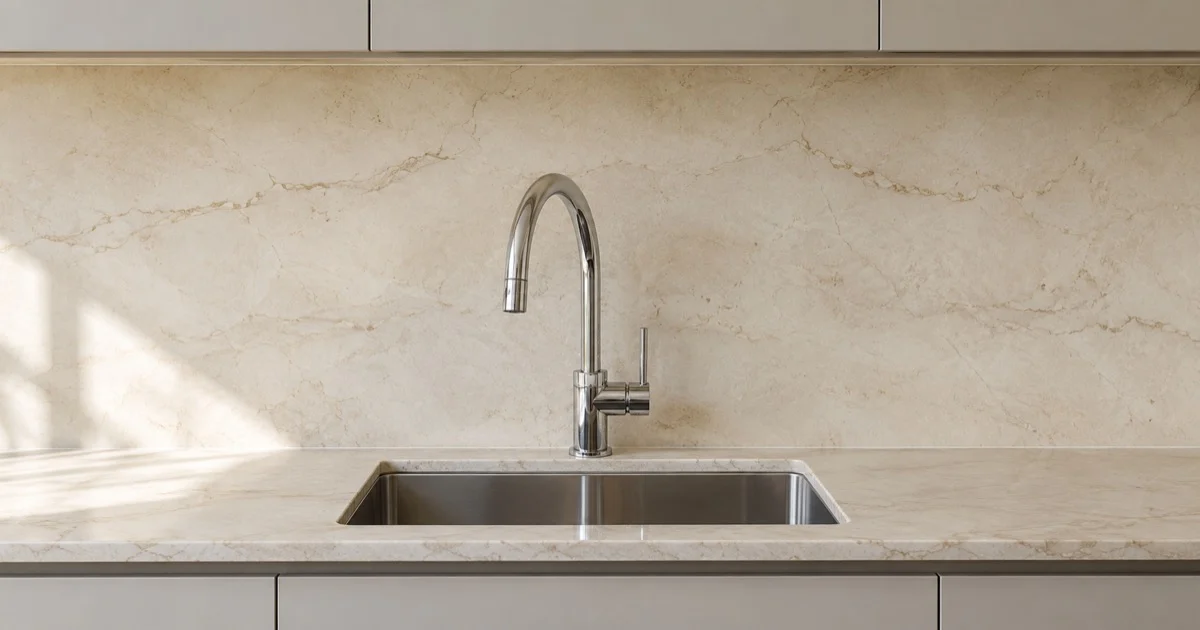
A stone splashback protects the wall behind a work area and can connect the benchtop pattern with the rest of the kitchen. Height should follow the room, cabinetry and appliance requirements rather than a universal dimension. Compare a low upstand, cabinet-height panel or full-height feature before approving the measured layout.
A larger stone panel can give the slab more presence, but it also needs careful setting out. Plan outlets, joins and the relationship with the benchtop before cutting begins.
Which stone splashback height should you choose?
Choose the height after reviewing wall protection, cabinetry and the visual role of the stone. Any typical dimension discussed during design is a guide only; confirm on measure and against appliance requirements.
| Option | Stone presence | Coordination |
|---|---|---|
| Low upstand | Lower | Wall finish above |
| Panel to cabinetry | Moderate | Cabinet and outlet positions |
| Full-height feature | Higher | Large-panel layout and handling |
An upstand is a short vertical return above the benchtop. It does not automatically satisfy the protection or clearance requirements around a cooktop.
How should splashback slab layout handle veins and joins?
Review the benchtop and wall pieces as a single composition. Decide whether the pattern should continue, change direction or provide contrast, then ask the fabricator to show the proposed pieces.
Mark outlet openings, panel boundaries and visible edges before approval. Do not expect a join to disappear completely or a small sample to establish the pattern across the whole wall.
Which stone directions should you compare?
Inspect Ceppo Rosso, Calacatta White and Fantasy Lux for their actual movement and usable dimensions. Confirm suitability for the proposed vertical application and nearby appliances.
 Marble collection
Ceppo Rosso
View the actual slab and confirm suitability.
View stone Marble collection
Calacatta White
View the actual slab and confirm suitability.
View stone Quartzite collection
Fantasy Lux
View the actual slab and confirm suitability.
View stoneCompare ESG’s slab options with your cabinet samples. Ask about finish, sealing and cleaning using Natural Stone Institute care guidance as a general reference.
What should you confirm before installing the panel?
Have the installer assess wall flatness, backing, fixing, edges and access for the panel. Coordinate outlets and appliance details before fabrication rather than adjusting the stone after installation.
Ask the appliance installer to confirm applicable requirements for the exact cooktop and surrounding materials. A natural stone face alone does not establish the suitability of the complete wall assembly.
Prohibited engineered stone panels are covered by Australia’s ban from 1 July 2024; consult Safe Work Australia’s engineered stone ban guidance. Never cut, grind or drill a stone splashback yourself, because processing can release hazardous silica dust.
What else should you ask about stone splashbacks?
Is there a standard stone splashback height?
There is no single design height that suits every kitchen. Cabinet positions, wall protection, outlet placement and appliance requirements all influence the choice. Treat typical dimensions as planning guides only, and confirm the final height on measure with the fabricator and the appropriate appliance installer.
Can the splashback match the benchtop exactly?
It may use the same material, but natural pattern and colour can vary between pieces and slabs. Review the proposed benchtop and splashback layout together before approval. Ask how veins, fragments, joins and cut-outs will relate instead of assuming that matching names produce identical adjoining surfaces.
Can outlets be cut after the splashback is installed?
Plan outlet positions before fabrication and have the electrician and fabricator coordinate the openings. A later alteration requires professional assessment and appropriate controls. Never drill, grind or cut a stone panel yourself, including for small outlet changes, because processing can create hazardous respirable crystalline silica.
Is any stone suitable behind a cooktop?
Do not assume suitability from the word stone alone. The exact material, treatment, backing, fixing system and appliance requirements need assessment together. Ask the appliance installer and fabricator to confirm the proposed assembly before ordering, and avoid using generic online clearance dimensions as the project specification.