Australia’s engineered stone ban applies to the manufacture, supply, processing and installation of prohibited benchtops, panels and slabs from 1 July 2024. Existing installed surfaces are a separate issue, with limited permitted work subject to controls. For new projects, verify the exact replacement product’s composition.
This guide explains Australia’s engineered stone rules and the buying questions that matter now. It does not treat old product descriptions or brand familiarity as evidence of current compliance.
What does the engineered stone ban cover?
The prohibited definition covers an artificial product containing at least 1% crystalline silica by weight, created by combining natural stone materials with other chemical constituents, and becoming hardened. Read the full Safe Work Australia definition and exclusions.
The engineered stone ban concerns benchtops, panels and slabs. A marketing phrase such as stone surface or mineral surface does not settle whether a particular product falls within it.
What if you already have an engineered stone benchtop?
An existing installed surface is not the same as new prohibited supply or installation. WorkSafe Victoria describes limited permitted processing for legacy products, including specified repair, modification, removal and disposal.
Read WorkSafe Victoria’s engineered stone guidance and engage a professional before any work. Never cut, grind, sand or drill an existing surface yourself, including for a small tap opening.
Do not remove or disturb a benchtop simply because its original material name includes engineered stone. Arrange an assessment if you are planning changes or have a specific concern.
Which alternatives can you consider for a new project?
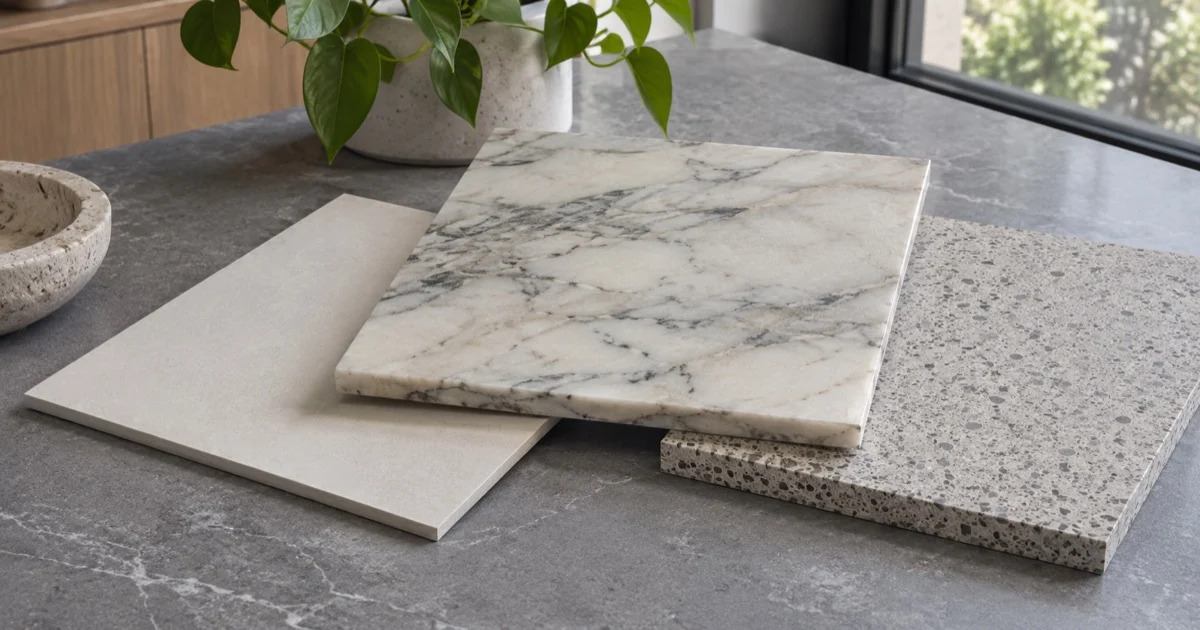
Natural marble, quartzite and granite are material families to compare. Porcelain and sintered stone can also be considered where the exact product meets the relevant exclusions, including the absence of resin.
 Marble collection
Ceppo Rosso
View the actual slab and confirm suitability.
View stone Quartzite collection
Fantasy Lux
View the actual slab and confirm suitability.
View stone Granite collection
Aqua Green
View the actual slab and confirm suitability.
View stoneThese three products illustrate natural stone options in ESG’s slab collection. Confirm the actual slab’s classification, intended use, finish and current availability before specifying it.
How do you check a replacement surface?
Ask for the product code, composition, current technical information and written confirmation of its suitability for the intended application. Review cleaning, heat protection, support and fabrication instructions separately from legal classification.
| Evidence | Decision value |
|---|---|
| Exact product documentation | High |
| General brand description | Limited |
| Appearance alone | Low |
Arrange final measurements and a professional installation plan. A compliant product can still require silica dust controls during processing, and compliance does not mean it suits every detail in your kitchen.
What else should you know about Australia’s engineered stone ban?
When did the engineered stone ban begin?
The ban on manufacture, supply, processing and installation of prohibited engineered stone benchtops, panels and slabs began on 1 July 2024. Definitions, exclusions and limited permitted activities matter. Read current Safe Work Australia and WorkSafe Victoria guidance before specifying a replacement or arranging work on an existing surface.
Must you remove an existing engineered stone benchtop?
The ban is not a general instruction to remove every installed benchtop. Existing surfaces and permitted legacy work are addressed separately in official guidance. If you plan repairs, alterations or removal, seek professional assessment and appropriate controls rather than disturbing the material or undertaking any stone processing yourself.
Are porcelain and sintered stone automatically compliant?
Do not assume compliance from the category name alone. The relevant exclusions for porcelain and sintered stone require products without resin. Obtain documentation for the exact product and confirm its intended application, while also reviewing fabrication, support and cleaning requirements with the supplier and professional fabricator.
Can a small tap hole be drilled as DIY work?
Never drill, cut, grind or sand a stone benchtop yourself, even for a small alteration. Processing can create hazardous respirable crystalline silica. Existing engineered stone work also involves specific restrictions and controls, so have a qualified professional assess the task and the applicable requirements before it proceeds.