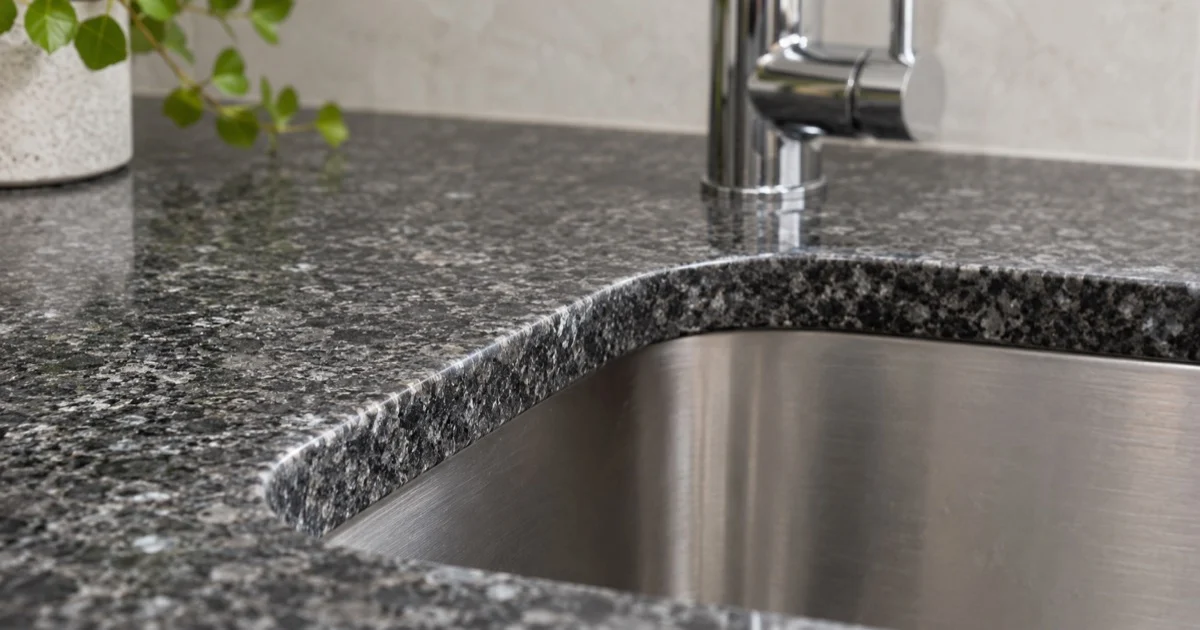
Granite is a natural igneous rock formed as molten material cools slowly underground. Geological granite contains quartz and feldspar, with other minerals contributing colour and texture. For benchtops, it is generally a practical choice when you confirm the actual slab’s composition, finish, treatment and support requirements.
What is granite like in your own kitchen? Start with daily use, then compare the slabs and details that suit the room.
What is granite in geological and commercial terms?
Geological granite is a coarse-grained igneous rock, meaning it forms from cooling molten material. The Natural Stone Institute’s geology guide explains how geological and commercial categories can differ.
A slab sold within a granite collection may have a different geological name. Ask about its composition and likely performance rather than assuming its trade category guarantees identical behaviour.
What are the advantages of granite benchtops?
Granite commonly provides good resistance to scratching and ordinary food acids. That makes it worth comparing when you want natural pattern with less concern about acid etching than marble.
| Consideration | General granite tendency | Your check |
|---|---|---|
| Scratch resistance | Higher | Mineral composition |
| Pattern consistency | Variable | Full slab layout |
| Care attention | Moderate | Stone and treatment advice |
Hardness does not prevent chips, impact damage or heat-related problems. Protect edges, use trivets and avoid sitting or standing on the benchtop.
Which granite slabs should you compare?
View Aqua Green, Titanium Leathered and Bonno as individual options. Compare the full pattern, the surface texture and the parts of each slab that would become your main work area.
 Granite collection
Aqua Green
View the actual slab and confirm suitability.
View stone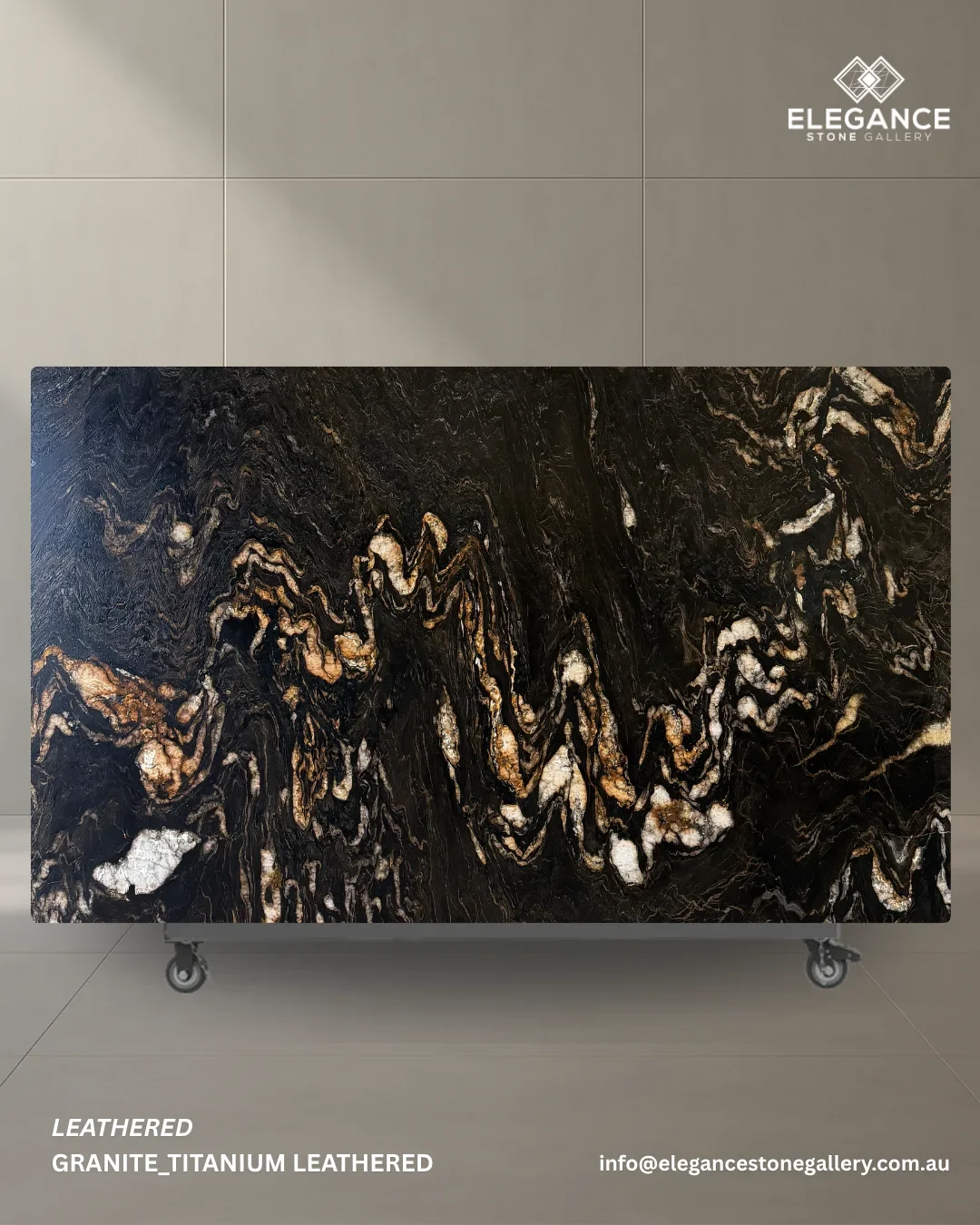 Granite collection
Titanium Leathered
View the actual slab and confirm suitability.
View stone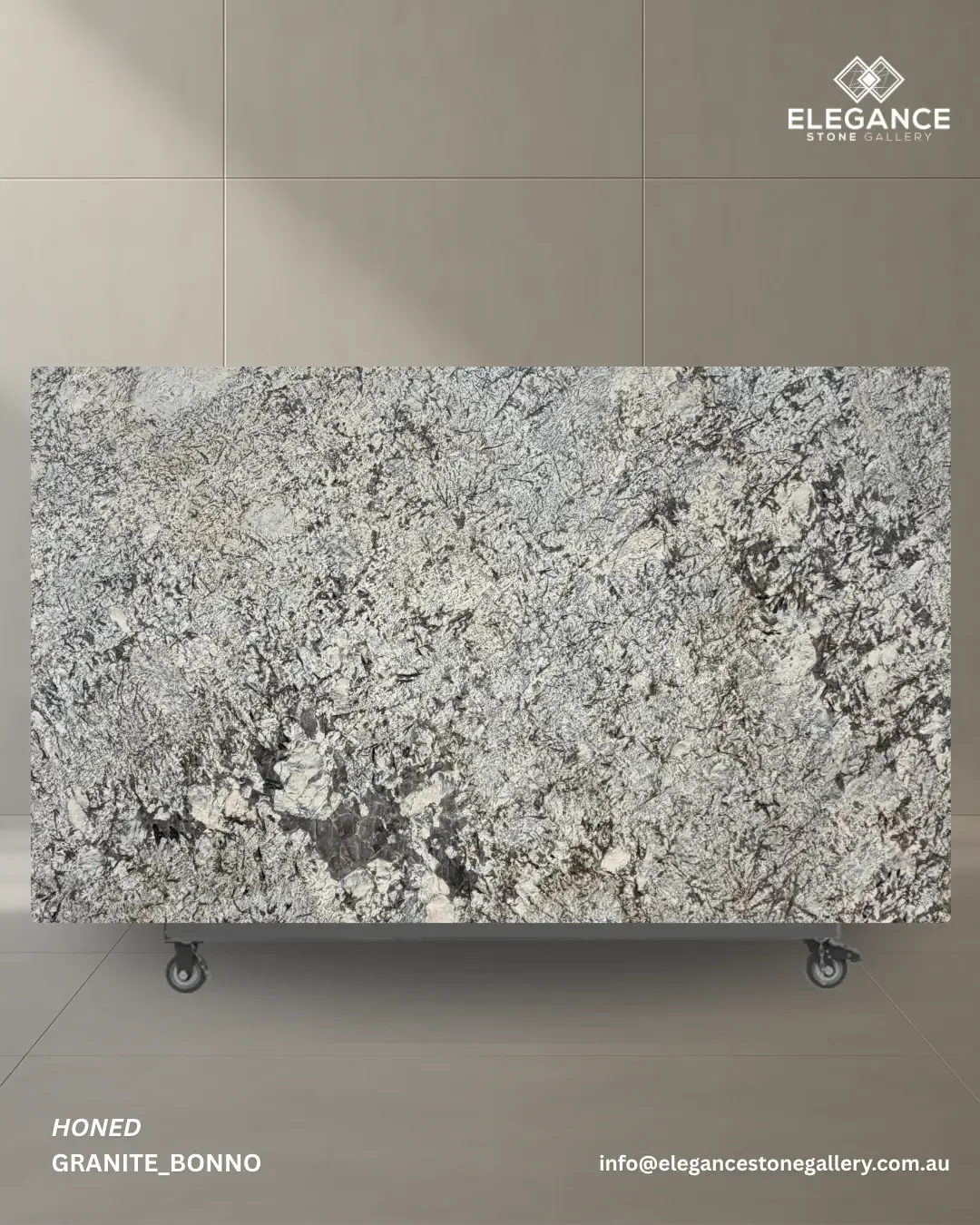 Granite collection
Bonno
View the actual slab and confirm suitability.
View stoneInspect samples in your kitchen lighting and alongside cabinet finishes. Confirm the actual slab’s finish, usable dimensions and suitability before approving a layout through ESG’s stone slab selection.
How do you care for and install granite?
Clean gently with a suitable neutral cleaner and soft cloth, then rinse and dry as directed. Ask whether your selected slab needs an impregnating sealer, a treatment that reduces liquid absorption.
Natural stone is outside Australia’s prohibited engineered stone category, but fabrication still needs silica dust controls. Read Safe Work Australia’s ban guidance, and never cut, grind or drill stone yourself.
Your fabricator should assess overhangs, sink openings, joins and access. Confirm final measurements on site rather than relying on an early kitchen plan.
What else should you know about granite?
Is all commercially named granite geological granite?
No. Commercial stone groups can include related rocks with different geological names. This does not automatically make them unsuitable, but it means the label alone cannot establish performance. Confirm the actual slab’s composition, surface treatment and intended use with the supplier before specifying it.
Can hot pans go directly on granite?
Use trivets instead of placing hot cookware directly on granite. Although many granites tolerate heat, sudden temperature changes and localised heating can affect stone, treatments or surrounding details. Follow the care advice for your actual benchtop rather than treating heat resistance as a guarantee.
Does granite always need annual sealing?
No fixed schedule suits every granite slab. Absorption, existing treatment, sealer type and household use all matter. Ask your supplier whether sealing is needed and how to review its performance. An impregnating sealer improves stain resistance, but it does not eliminate the need to clean spills promptly.
Is natural granite affected by the engineered stone ban?
Natural granite is not prohibited by the engineered stone ban applying to benchtops, panels and slabs from 1 July 2024. Processing it can still produce hazardous silica dust. Leave cutting, grinding, drilling and modifications to professionals using appropriate controls, and confirm the exact product classification.