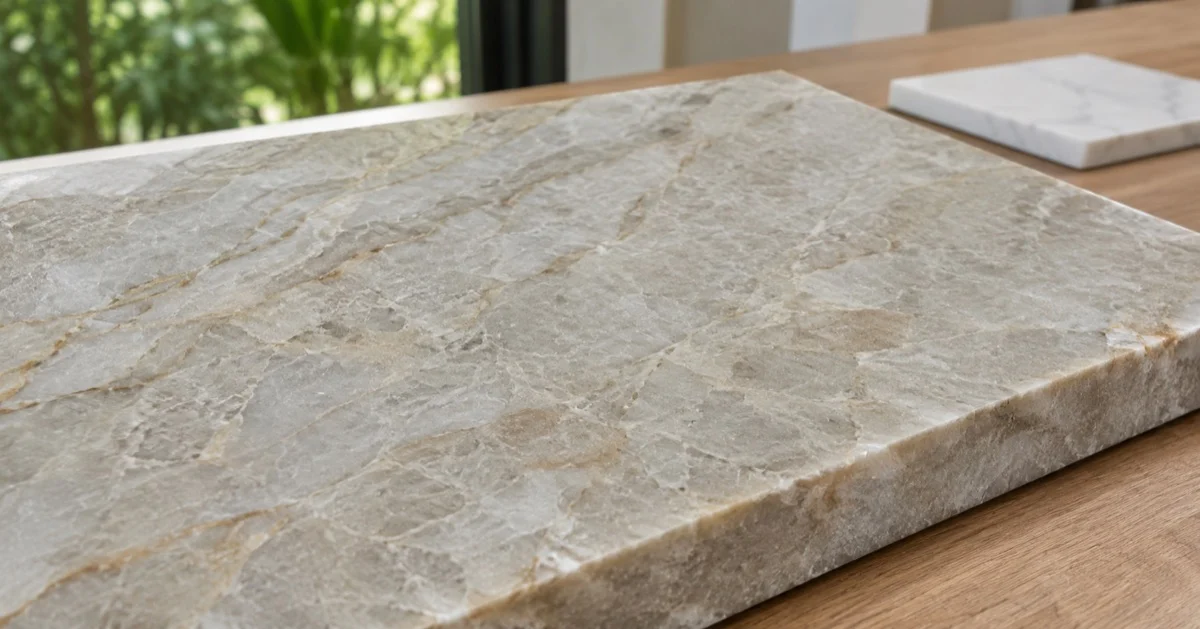
Quartzite is a natural rock formed when heat and pressure transform quartz-rich sandstone. It generally offers strong resistance to scratching and ordinary food acids, although individual slabs vary. When you ask what is quartzite, distinguish the natural stone from manufactured surfaces commonly marketed as quartz.
For your kitchen, the useful questions are about the actual slab, its treatment and the way it will be fabricated. A product name alone cannot answer them.
What is quartzite, and how does it form?
Quartzite forms when quartz-rich sandstone recrystallises under heat and pressure. Quartz grains grow together, producing an interlocking structure; see the Minerals Education Coalition’s quartzite explanation.
Commercial stone names can cover different geological materials. Ask your supplier to confirm the classification and care requirements rather than assuming every pale, veined slab is quartzite.
How does quartzite vs quartz affect your choice?
Natural quartzite is quarried and cut into slabs, while manufactured quartz surfaces combine mineral ingredients with other constituents. They are different materials, with different product-specific instructions.
| Surface | Pattern variation | Verification needed |
|---|---|---|
| Natural quartzite | Higher between slabs | Classification and treatment |
| Manufactured surface | Generally more controlled | Exact composition and compliance |
Australia banned prohibited engineered stone benchtops, panels and slabs from 1 July 2024. Check Safe Work Australia’s ban guidance; a familiar brand name does not establish compliance.
Which quartzite slabs should you inspect?
Compare Patagonia Crystal, Fantasy Lux and Taj Mahal Block 1 through their actual slabs. Review the background, mineral movement and areas that would sit beside a sink or join.
 Quartzite collection
Patagonia Crystal
View the actual slab and confirm suitability.
View stone Quartzite collection
Fantasy Lux
View the actual slab and confirm suitability.
View stone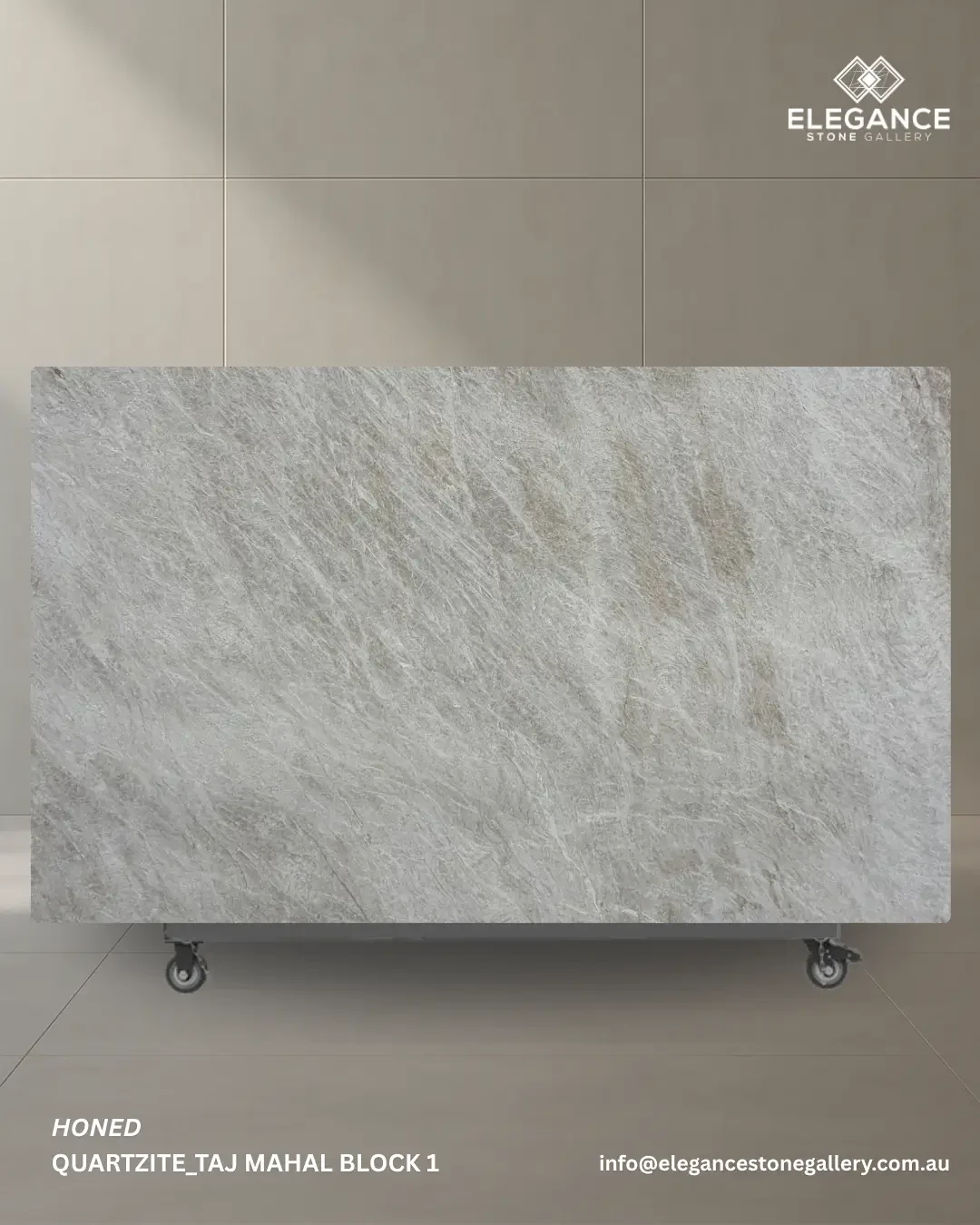 Quartzite collection
Taj Mahal Block 1
View the actual slab and confirm suitability.
View stoneBring your cabinet and flooring samples when viewing ESG’s quartzite collection. Confirm current availability, usable dimensions, finish and suitability for your intended application.
How do you care for quartzite benchtops?
Use a suitable neutral stone cleaner, soft cloth, chopping board and trivets. Sealing needs depend on the selected stone and treatment, so follow the supplier’s written care advice.
Ask your fabricator to review joins, cut-outs, supports and site access before approval. Never cut, grind or drill quartzite yourself: processing can release hazardous respirable crystalline silica, fine dust that can damage your lungs.
What else should you know about quartzite?
Is quartzite the same as engineered quartz?
No. Quartzite is a naturally formed rock, while engineered quartz is a manufactured surface. The word quartz can refer to the mineral or to a marketed product category. Confirm the exact material and its compliance before choosing a new benchtop in Australia.
Does every quartzite slab need sealing?
Sealing requirements vary with the stone, its porosity and any applied treatment. Ask for advice about your actual slab rather than following a fixed annual schedule. Use the specified product and renewal guidance, and remember that sealing does not make any surface stain-proof.
Can quartzite scratch or chip?
Yes. Quartzite generally resists scratching well, but its edges and narrow sections can still chip or suffer impact damage. Use chopping boards, avoid dropping heavy objects and have supports assessed. Individual mineral variations, fissures and treatments also affect how a particular slab behaves.
Can you cut quartzite yourself?
Never cut, grind, sand or drill quartzite yourself. Processing stone can release respirable crystalline silica, fine dust capable of causing serious lung disease. Ask a professional fabricator to assess modifications and carry them out using appropriate controls, including for small tap holes or adjustments.