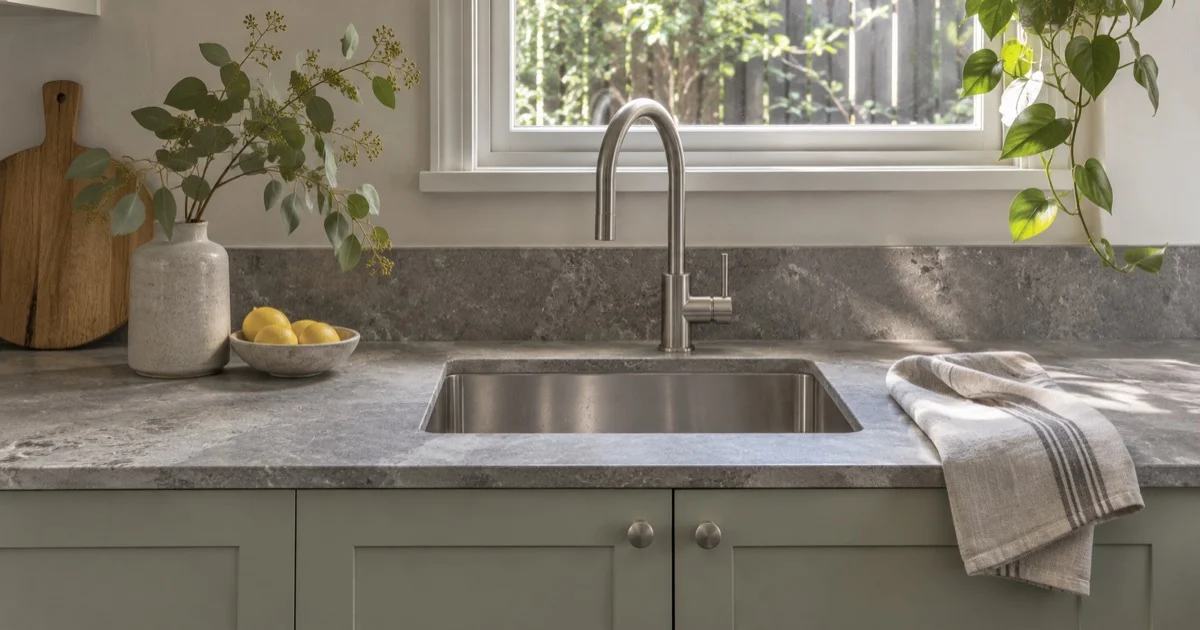
Choose a kitchen stone benchtop by matching the actual material’s care requirements to your daily routines, then confirming the finish and fabrication plan. Marble, quartzite and granite offer different general tendencies, but individual slabs vary. Review spills, heat protection, scratching, support and cleaning before deciding from appearance alone.
A kitchen used for frequent cooking asks different things of its surfaces from one used mainly for entertaining. Describe what happens on your benchtop during an ordinary week.
What should a kitchen stone benchtop handle?
Check food preparation, cleaning, visible wear and everyday protection against your household routine. These four daily-use checks help you compare a kitchen stone benchtop on more than appearance.
- Food preparation. Discuss how the material responds to citrus, vinegar, wine and other common spills.
- Cleaning. Confirm compatible products and a routine you can maintain.
- Visible wear. View the actual finish and decide which marks you are comfortable living with.
- Protection. Plan chopping boards, trivets and protection from impact around edges and openings.
Etching is a chemical reaction that changes a stone’s finish; staining occurs when a substance penetrates and discolours it. They need different assessment, and sealing does not prevent acid etching.
Use Natural Stone Institute care guidance as a starting point. Confirm the instructions relevant to your actual slab, finish and treatment.
How do indoor stone benchtops compare?
Compare material tendencies, then verify the selected slab. Marble is generally more acid-sensitive than genuine quartzite or many granites, while all need protection from impact and direct heat.
| Stone family | Food-acid resistance | Care attention |
|---|---|---|
| Marble | Lower | Higher |
| Genuine quartzite | Generally higher | Moderate |
| Granite | Generally higher | Moderate |
These qualitative comparisons are not laboratory ratings for ESG products. Ask about mineral variation, treatment and the finish being supplied.
Which stone directions should you inspect?
Compare Ceppo Rosso, Fantasy Lux and Aqua Green with your cabinet and flooring samples. Review the full slab rather than assuming a small sample shows all its movement.
 Marble collection
Ceppo Rosso
View the actual slab and confirm suitability.
View stone Quartzite collection
Fantasy Lux
View the actual slab and confirm suitability.
View stone Granite collection
Aqua Green
View the actual slab and confirm suitability.
View stoneView ESG’s stone slab options and confirm current availability and usable dimensions. A proposed layout helps you understand where prominent features and joins will sit.
Can your indoor stone palette extend outdoors?
You can coordinate the colours while selecting finishes and treatments for each location. Approval for a kitchen stone benchtop does not establish suitability for an exposed bench, wall or wet floor.
Describe sun, rain and moisture exposure separately to your project team. Ask for application-specific advice before carrying the same material beyond the kitchen.
What should stone kitchen planning confirm?
Confirm sink, tap and cooktop information before fabrication. Have your project team assess openings, narrow sections, overhangs, cabinetry readiness and installation access.
Use chopping boards and trivets, remove spills promptly and clean with suitable gentle products. Ask whether sealing is needed and obtain written care instructions at handover.
For manufactured alternatives, check Safe Work Australia’s engineered stone ban guidance following the 1 July 2024 ban. Never cut, grind, sand or drill stone yourself; processing can release hazardous respirable crystalline silica.
What else should you ask about kitchen stone benchtops?
Which stone is best for a busy kitchen?
The best fit depends on your routines, care preferences and the particular slab. Genuine quartzite and many granites generally resist household acids better than marble, but all materials need protection. Compare actual products and finishes with your supplier rather than choosing from a universal best-stone ranking.
Should you choose a stone before ordering the sink?
Coordinate both decisions before fabrication. Sink dimensions, mounting style and installation instructions affect the opening and surrounding stone, while cabinet size and support also matter. Confirm the final sink, tap and appliance information with your project team before approving the measured fabrication layout.
Will sealing make the benchtop maintenance-free?
No. An impregnating sealer can reduce absorption and improve stain resistance, but it does not remove the need for cleaning and protection. It also does not prevent acid etching on carbonate-rich stone. Follow material-specific instructions and ask how the selected treatment should be reviewed and maintained.
Can you stand on stone to reach a cupboard?
Do not use the benchtop as a step or seat. Concentrated loads can affect edges, openings, narrow sections or unsupported areas even when the material is hard. Use suitable access equipment and have all supports assessed as part of the professional fabrication and installation plan.