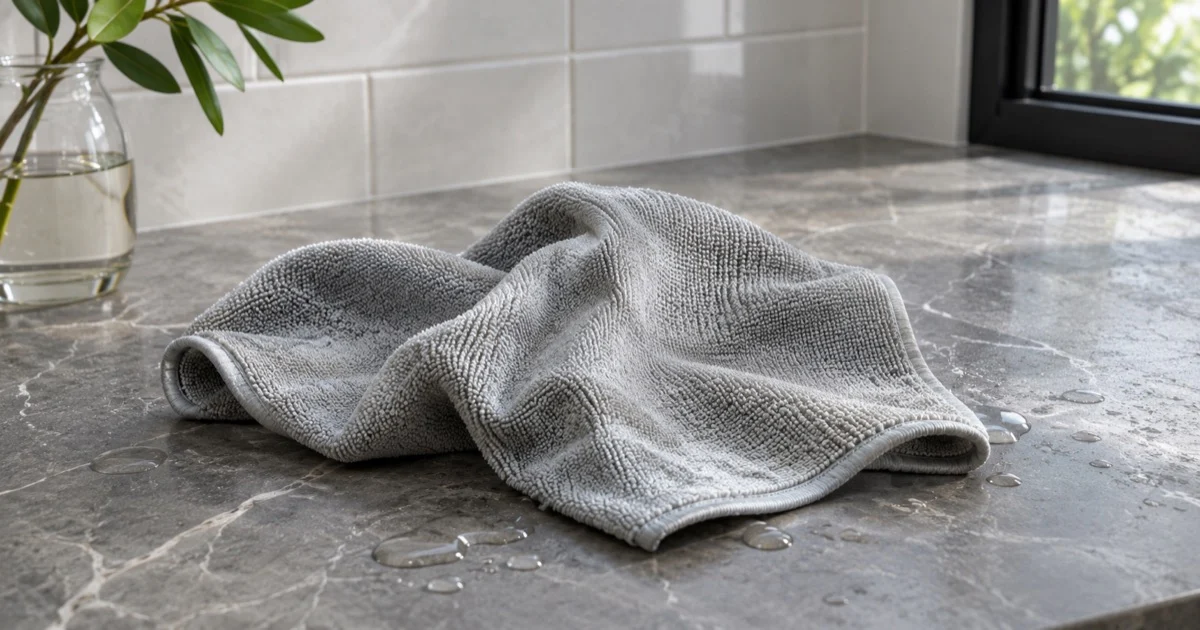
Stone benchtop cleaning starts with a suitable neutral cleaner, a soft cloth and material-specific instructions. Blot spills promptly, remove grit, clean gently, rinse as directed and dry. For persistent stains or dull marks, identify the problem before trying stronger products or abrasive tools.
This stone benchtop cleaning guide covers routine care and the point where deeper treatment needs advice. Stone composition matters, so confirm what you have before choosing a cleaner.
What does daily stone benchtop cleaning involve?
For daily stone cleaning, remove dirt gently and confirm the cleaner’s instructions before starting. Choose a neutral stone cleaner that suits the actual material and treatment.
- Blot spills. Lift the liquid rather than spreading it over a larger area.
- Remove grit. Use a soft cloth so loose particles do not become abrasives.
- Clean gently. Apply a suitable neutral cleaner at its recommended dilution.
- Rinse as directed. Remove cleaner residue with clean water where instructed.
- Dry the surface. Use a clean soft cloth.
The Natural Stone Institute care guidance explains why acids can damage carbonate-rich stone and excessive cleaner can leave a film.
What if a stone benchtop needs a deeper clean?
Identify whether you are seeing residue, a penetrating stain or a change in surface finish. An etch mark is a chemical change, often dull in appearance, and is different from material sitting on the surface.
| Issue | Initial approach | Escalation |
|---|---|---|
| Cleaner residue | Gentle rinse and dry | Review product and dilution |
| Persistent coloured mark | Record likely cause | Stone specialist assessment |
| Dull patch | Avoid abrasion | Check for etching |
Photograph the mark and note any spill or product involved. Seek advice before using stain removers, poultices or polishing compounds; a stronger cleaner may make the problem worse.
Why does the actual stone change the cleaning advice?
Marble, quartzite and granite have different general tendencies, while individual slabs and treatments vary. Compare these ESG examples to understand why one universal cleaning promise is unreliable.
 Marble collection
Ceppo Rosso
View the actual slab and confirm suitability.
View stone Quartzite collection
Fantasy Lux
View the actual slab and confirm suitability.
View stone Granite collection
Aqua Green
View the actual slab and confirm suitability.
View stoneConfirm the material through ESG’s stone collection or your original installation records. Ask for the exact finish, any treatment and written care instructions.
Which cleaning shortcuts should you avoid?
Keep vinegar and citrus-based cleaners away from carbonate-rich stone, and avoid abrasive powders or pads. Do not mix cleaning chemicals or improvise aggressive treatments on an unidentified surface.
Never sand, grind, cut or drill stone as a cleaning or restoration task. Processing can release hazardous silica dust, so ask a professional to assess damaged finishes.
Existing engineered stone needs particular care before any modification. Australia’s ban on prohibited new benchtops, panels and slabs began on 1 July 2024; consult Safe Work Australia’s engineered stone ban guidance if you are unsure of the material or proposed work.
What else should you ask about cleaning stone benchtops?
Can you clean stone with vinegar?
Avoid vinegar on carbonate-rich stone such as many marbles and travertines because acids can etch the surface. A general household cleaning recipe is not suitable advice for every stone or treatment. Choose a compatible neutral cleaner and follow the instructions supplied for your actual benchtop and finish.
Why does the benchtop look streaky after cleaning?
Residue from excessive cleaner, soap or incomplete rinsing can contribute to streaks, but other marks need assessment. Review the product and dilution, then rinse and dry as instructed. If the appearance remains, ask a stone specialist to identify the issue before using stronger chemicals or abrasive tools.
Can a dull ring be removed with more cleaner?
A dull ring may be etching, which changes the stone’s surface finish rather than leaving ordinary surface dirt. More cleaner or abrasive scrubbing may not resolve it and can cause further damage. Photograph the mark and seek professional assessment before attempting stain removal or polishing.
What information helps a specialist assess a stain?
Provide the stone name if known, the finish and any treatment, a clear photograph, when the mark appeared and any likely spill or cleaning product involved. Explain what you have already tried. That information helps distinguish residue, staining and etching before a compatible treatment is considered.